BG Charles Keller’s life reads like the story of American engineering itself—spanning rivers, harbors, wars, coasts, and the rise of the United States as an industrial and global power. Born in Rochester, New York, on February 13, 1868, Keller entered the world at a moment when the nation was still rebuilding from the Civil War and dreaming ambitiously about its future. He carried that ambition with him to West Point, where he excelled academically and graduated second in the Class of 1890. Commissioned into the U.S. Army Corps of Engineers, he spent the next half-century shaping the infrastructure, policies, and engineering doctrine that helped modernize the country.
His career began quietly at the Engineer School at Willets Point, where he absorbed the technical rigor that defined the Corps. From there, he moved into fieldwork along the rivers of Alabama and Florida before settling into early assignments at Rock Island, Illinois. In those years, the Corps was central to national growth, and Keller quickly became part of the cadre of young officers turning waterways into functioning commercial routes. By the late 1890s, he was leading torpedo defenses in Charleston and Port Royal. Soon after, he found himself posted to Portland, Maine, and then to the Missouri River Commission, each assignment sharpening his understanding of rivers, coastal engineering, and the nation’s strategic needs.
At the turn of the century, Keller’s service extended overseas. As America entered the era of overseas expansion, he deployed to the Philippines, serving first as an engineer officer in Mindanao and later for the Moro Province in Zamboanga. These were formative years for the Corps abroad, and Keller helped build the roads, administration buildings, and support structures that enabled U.S. operations in a new and often volatile territory. When he returned to the United States, his responsibilities grew even larger. He led the U.S. Lake Survey, oversaw the Detroit Lighthouse District, and served on numerous engineering boards. His reputation for technical brilliance led to his appointment to the Niagara Falls Committee, where he helped shape the early modernization of hydroelectric power at one of the country’s most important natural resources.
By the time the United States entered World War I, Keller was one of the Corps’ most seasoned and trusted officers. He served as Assistant to the Chief of Engineers and then as a national power administrator under the War Industries Board, helping orchestrate the immense industrial mobilization required for a global conflict. In 1918, he deployed to France as a brigadier general and Deputy Chief Engineer of the American Expeditionary Forces. There, he oversaw engineering operations vital to the war effort: road and rail construction, bridge building, water supply, fortifications, and the sprawling logistics networks that sustained millions of troops. For his wartime service, he earned the Distinguished Service Medal and was made a Chevalier of the French Legion of Honour.
After the war, Keller returned to high-level engineering policy roles. From 1919 to 1921, he served on the Board of Engineers for Rivers and Harbors, helping shape national waterway development at a crucial time in American commerce. From 1921 to 1923, he served as Engineer Commissioner for the District of Columbia, where he helped modernize the capital’s infrastructure and guide its growth. He retired in 1923 as a colonel, and in 1930, Congress advanced him to brigadier general in recognition of his decades of distinguished service.
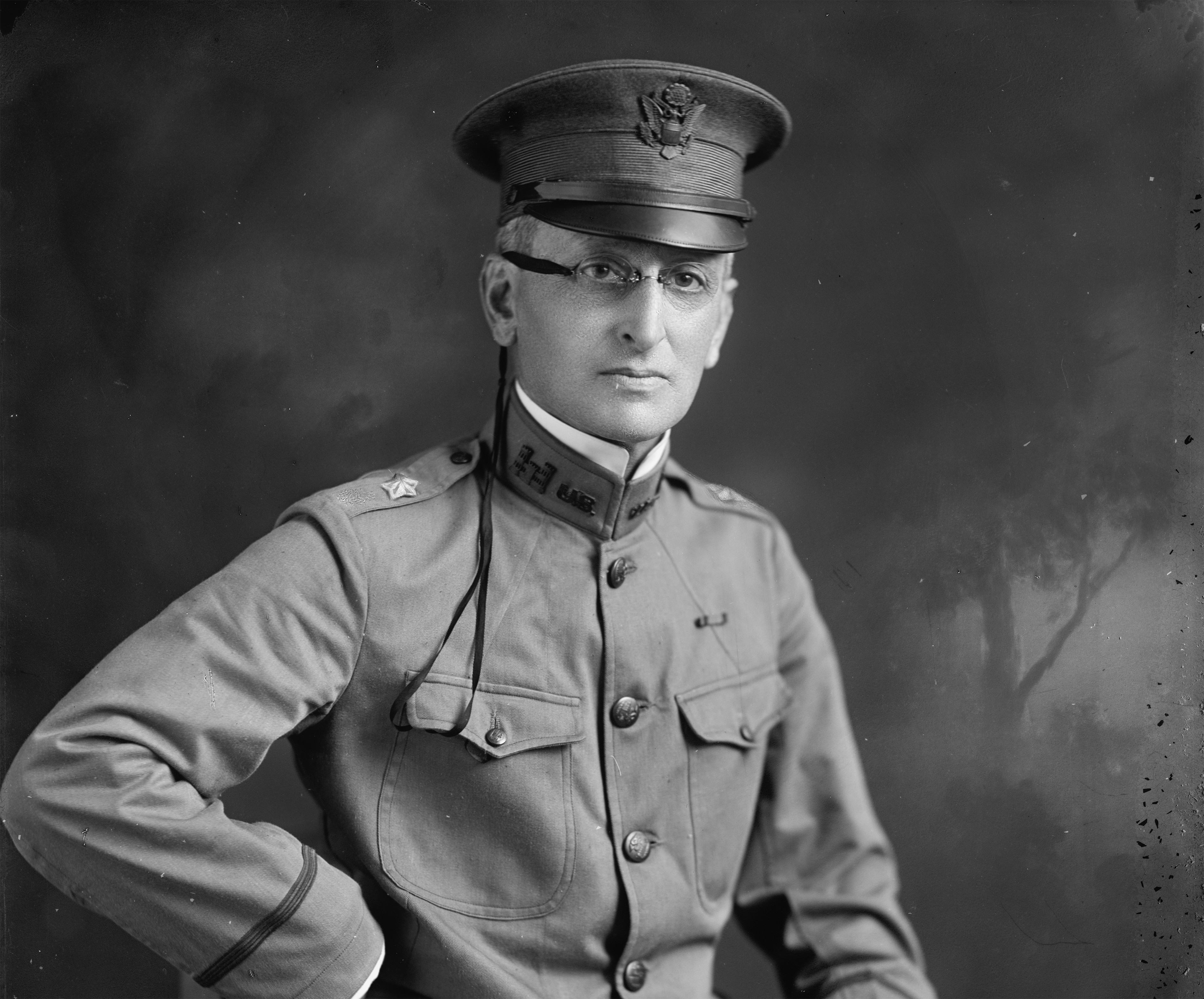
BG Keller
But Keller was not finished. As World War II approached and the United States began preparing for the possibility of a global conflict, the Army once again turned to its old engineer. In 1940, at age seventy-two, he returned to active duty as the Chicago District Engineer. There, he oversaw critical wartime construction, industrial support facilities, and Great Lakes infrastructure during one of the most intense mobilizations in U.S. history. When he finally retired for the second time in 1943, he was seventy-five years old—the oldest active-duty officer in the United States Army during World War II. For this extraordinary chapter of service, he was awarded the Legion of Merit.
Keller continued to shape American industry even after leaving the Army for good, serving as an engineering consultant, senior executive, and later president of a major utilities subsidiary. He died in Coronado, California, in 1949, and his ashes were interred at Arlington National Cemetery—an appropriate resting place for a man whose life’s work helped build the nation’s physical backbone.
BG Charles Keller’s career stands as one of the most remarkable in the history of the U.S. Army Corps of Engineers. Through wars, peacetime expansion, global deployments, and the transformation of the American landscape, he remained devoted to the idea that engineering was a form of national service. His legacy lives on in waterways and harbors, in engineering institutions, in doctrine that still guides the Corps today, and in the very shape of the nation he spent his life strengthening and defending.